
Following on from this tweet I wrote last year, I want to break down two concepts that fundamentally shift how I approach ranking in Google.
What is SERP Reshaping?
When you search something on Google, the results page isn’t just a list of the “best” pages. It’s a composition—a mix of different result types that Google has decided fit the query. You might see blog posts, product pages, videos, news articles, or forum discussions. Google chooses that mix based on what it thinks the query needs.
SERP Reshaping is about changing that mix.
Here’s the idea: if Google currently shows 10 blog posts for a keyword, that’s because Google has learned “this keyword = blog content.” But that learning isn’t fixed. It’s based on what exists and what signals Google receives about what might satisfy users. If you flood the ecosystem with a different type of content—say, forum discussions—Google will eventually notice. It shifts the SERP composition first, inserting those discussions as a test. Then it measures whether users engage. If they do, the shift sticks. If they don’t, it snaps back.
You’re not trying to rank a better blog post than the competition. You’re trying to change what Google thinks belongs on that results page in the first place.
Instead of asking “how do I match the intent Google expects?” you’re asking “how do I change what Google expects?”
That’s the difference between playing the game and changing the rules.
The Problem With How SEO Is Taught
Most SEO is discussed and taught on this model: match search intent, meet consensus, and build links hoping authority and page rank carries you over the line.
That game was lost to authority before it started.
If you’re an affiliate site competing against established publishers for “best credit cards,” you’re not playing the same sport. You’re playing a different sport on a field that doesn’t belong to you—unless you spend a million dollars on press and link building.
What most SEOs miss is that Google doesn’t compare websites one by one. It categorizes them into source clusters based on feature vectors—forums vs. affiliates, e-commerce vs. local businesses. Each cluster has its own ranking boosts and quality expectations.
Your business model and engagement model determine your source classification before your content even gets evaluated. For a query like “running shoes,” you might be classified as a manufacturer, retailer, reviewer, or running blog. Each lands in a different cluster. If you’re in the wrong one, topical coverage alone won’t save you.
Now compare that to “best running shoes.” The word “best” changes everything. Suddenly Google needs to answer a judgment question, not a product question—and forum content almost always shows up. The query itself invited a different source type.
Why Source Type Matters More Than Content Quality
Here’s something that confuses people: a messy forum thread with rambling answers, off-topic tangents, and maybe one actually helpful reply can outrank a polished, well-researched article.
That seems broken. But it’s not.
Google isn’t just asking “which page has the best content?” It’s asking “what type of source should answer this query?”
For some queries, the answer is “a single authoritative source.” For others, it’s “multiple perspectives from real people.” When the query demands the second type, Google looks for sources that provide that—and forums are built for it. They naturally contain disagreement, personal experience, edge cases, and ongoing conversation.
So the forum doesn’t win because it’s higher quality. It wins because it’s the right category of source for what the query is asking. The affiliate article might be objectively better content, but it’s the wrong shape. It’s a square peg for a round hole.
How Google Actually Compares Sources
Google evaluates sources at the domain level before it evaluates individual pages. Think of it as: expertise, originality, freshness, and importance—measured across everything a site publishes, not just the page you’re trying to rank.
These site-wide signals connect a domain to a topic or a region. They determine what kind of source you are.
The key insight: Google is not ranking pages against pages. It’s classifying sources into categories, then ranking within those categories.
The process looks something like this:
- Identifying a source — domain / subdomain / platform classification
- Detecting original content from the source — originality & source-level contribution signals
- Analyzing & categorizing content — assigns the source to one or more clusters (forum, blog, product page, etc.)
- Scoring the source within a category — not “is this page good?” but “how strong is this source as this type?”
- Threshold check — if passed, the source becomes eligible for rankings inside that vertical
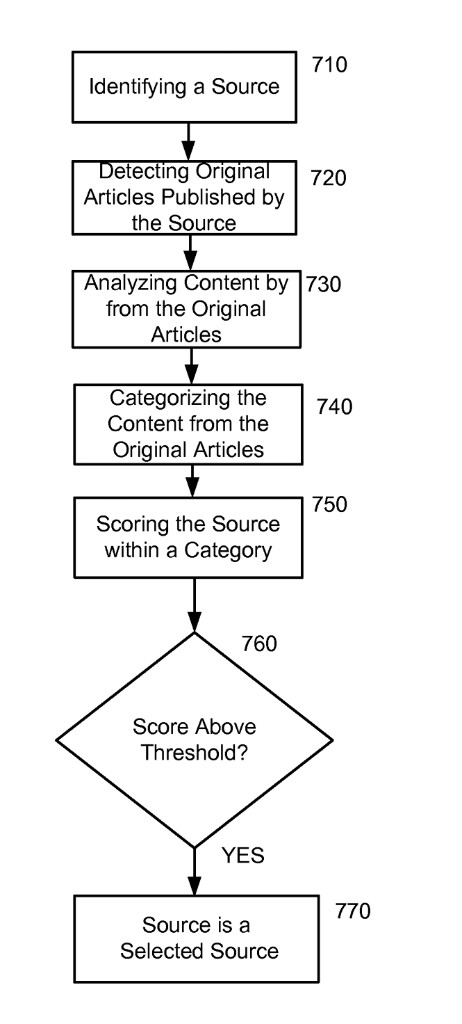
Google is not ranking forums vs blogs head-to-head. It is ranking forum-sources inside the forum cluster.
The Two Models
I used to collapse these two systems into one, and separating them changed the way I think about SEO entirely.
They operate at different layers of Google’s stack:
- Query Interpretation → SERP Reshifting
- Source Classification → SERP Reshaping
Understanding how they interact is the key to everything else.
Model 1: Query Interpretation → SERP Reshifting
What This Model Does
This model answers one question: What kind of answer does the user want?
It runs before ranking and decides:
- Which verticals are eligible
- Which source types are allowed
- How experimental the SERP can be
What Triggers It
This model is driven by linguistic signals in the query.
Key destabilizers:
- Interrogatives (what, why, is, should)
- Evaluative adjectives (best, safe, worth it)
- Uncertainty markers (really, legit, scam)
- Social proof cues (anyone, people say)
These signals weaken certainty and invite discourse.
What It Outputs
Not rankings—constraints.
It decides:
- “Forums are allowed”
- “Multiple answers preferred”
- “Freshness weighted higher”
- “Authority threshold lowered”
This causes SERP reshifting:
- Forums appear
- Reddit boxes trigger
- Quora leaks into top 10
- Volatility increases
Different triggers produce different constraints. A query like “buy running shoes” shifts toward product pages and shopping results. Location works the same way—and you don’t even need to type “near me.” Google infers your location naturally. In the US, you’re more likely to get local packs and product carousels as dedicated SERP features. In the UK or rural areas, you might only see local businesses and products embedded within the 10 blue links rather than as separate modules. Same query, different SERP composition based on where you are. The query interpretation model is constantly deciding what type of SERP to build before any ranking happens.
Think of this model as deciding the game mode.
Model 2: Source Classification → SERP Reshaping
What This Model Does
This model answers: Which sources are good at being this kind of source?
It does not compare blog vs blog or site vs site in a universal sense. It compares:
- Forum vs forum
- Ecommerce vs ecommerce
- Publisher vs publisher
- Listicle vs listicle
What It Uses
Inputs:
- Content type consistency
- Engagement model
- Originality patterns
- Site-wide signals
- Link graph proximity
- Structured data
- Behavioral signals
Output:
- Source cluster assignment
- Category quality score
- Eligibility thresholds
What It Outputs
Eligibility + scoring within a cluster.
If you’re a forum, you compete with forums. If you’re a reviewer, you compete with reviewers.
This is SERP reshaping: you alter which cluster dominates a query by injecting sources of a particular type, increasing their collective presence, and crossing the threshold where Google reweights the cluster. Forums work well for this, but the principle applies to any source type—you can reshape toward listicles, product pages, local results, or whatever cluster is closest to what you can realistically produce and get indexed.
Think of this model as choosing the teams.
How the Two Models Interact
This is the key.
Step-by-step:
- User types a query (e.g., “is X safe”)
- Query interpretation model fires—detects uncertainty + evaluation, allows discussion-heavy verticals, SERP becomes volatile
- Source classification model evaluates candidates—”Which forums are good forums?” “Which discussion sources pass quality thresholds?”
- Result: Reddit / Quora / seeded forums appear, traditional blogs suppressed, low-authority pages can rank
Why People Get This Wrong
Most SEOs think: “Forums rank because Google likes forums now.”
Wrong.
Forums rank because:
- Queries invite them
- Source clusters enable them
- Ranking happens inside that constraint space
The Simple Analogy
- Model 1 (Query Interpretation) = What sport are we playing?
- Model 2 (Source Classification) = Which teams are allowed to play?
You can’t win football by being good at basketball. You can’t rank a product page when the query wants a blog post, and you can’t rank a blog post when the query wants a product page.
Why Certain Queries Trigger Reshifting
This is the part most SEOs miss because it’s not “SEO.” It’s language.
Epistemically Weak Queries
Queries like:
- what is X
- is X safe
- why does X
- does anyone use X
- is X worth it
- what happens if X
These look factual on the surface, but they are not fact-seeking in practice.
They are epistemically weak because:
- The user does not know which authority to trust
- The answer is assumed to be contextual, experiential, or contested
- Multiple answers can be “correct”
This is why Google treats them as open epistemic queries, not closed informational ones.
Question Terms as SERP Destabilizers
Certain query operators dramatically increase result volatility and experimentation.
High-risk terms include:
- Interrogatives: what is, why is, how does, does X, should I, is it normal to
- Validation / social proof cues: worth it, legit, safe, scam, real, recommended
- Experience framing: anyone tried, people say, reviews say, opinions on
Once these appear, Google:
- Lowers trust in single-author answers
- Increases tolerance for low-authority sources
- Tests forum-heavy recall
Why These Queries Reshuffle More Easily Than Commercial Ones
Commercial queries like “buy X,” “X price,” or “X specs” have hard intent boundaries. Google knows what type of result satisfies them.
But question-based queries have:
- Fuzzy intent
- Unclear answer format
- No stable canonical page
So the ranking system becomes exploratory rather than confirmatory.
That’s why you can inject 5–20 discussions, trigger forum eligibility, and reshape the SERP faster than with product terms.
The Semantic Switches
Words like best, new, safe aren’t just adjectives. They are intent-shaping evaluative modifiers.
They don’t just describe properties—they reframe the user’s information need in a way that forces a search engine to reinterpret what kind of answer is being requested.
They Signal a Shift From Factual to Judgment-Based Intent
Adding any of these words tells the system:
“I am no longer asking for what exists—I am asking for what should be chosen.”
That moves the query from:
- Descriptive / referential → “X”
to:
- Evaluative / deliberative → “best X”, “new X”, “safe X”
Semantically, this invokes normative evaluation, not objective truth.
They Introduce an Implicit Comparison Class
Each word forces a comparison, even if unstated:
- best → best among alternatives
- new → new relative to a prior state
- safe → safe relative to potential harms
This makes the query underspecified in a way only human discourse typically resolves.
In Formal Semantic Terms
These adjectives behave like degree predicates with a free contextual parameter:
best(x) → max_d [ quality(x, d) relative to context C ]
safe(x) → low_risk(x) relative to threat model T
new(x)  → recent(x) relative to reference time R
Because C, T, and R are not fixed, the engine compensates by surfacing how people are resolving these parameters in practice.
Why Google Shifts Toward Forums
Because these adjectives are:
- Context-dependent
- Value-laden
- Not verifiable by a single authoritative source
Google cannot answer them with a single canonical page.
Forums, Reddit threads, Stack Overflow, etc. are useful because they contain many perspectives, encode lived experience, and reflect community consensus or disagreement.
From a semantic standpoint, the engine is responding to a subjective predicate, so it seeks distributed human judgments.
The Result
That’s why queries combining “best” + “what is” + “safe” are disproportionately forum-driven and disproportionately manipulable.
And why Reddit / Quora / Facebook groups are not “ranking well”—they are being invited in by the query itself.
SERP Reshifting vs SERP Reshaping: The Key Distinction
These are two distinct modes:
| SERP Reshaping | SERP Reshifting | |
|---|---|---|
| Nature | Deliberate | Reactive |
| Approach | Engineered | Faster |
| Method | Seeded at scale | Triggered by query semantics |
| Stability | Slower, more stable | More volatile |
Question-based queries sit at the intersection: easy to reshuffle, cheap to influence, fragile in structure.
How SERP Reshaping Actually Works
The following isn’t a checklist to follow, but a description of the signals Google responds to when SERP composition changes.
Now that you understand the semantic triggers, here’s the mechanics:
- Identify a keyword with traditionally commercial, transactional, or informational SERPs—typically showing blog posts, ecommerce pages, or static resources.
- Deploy multiple discussions or forum threads (ideally 5–50) on different platforms or seeded across your own forum network, each targeting the same keyword naturally in a variety of different strategies.
- Ensure indexation and visibility via internal links, sitemap pings, or syndication.
- Wait for Google to detect the pattern. Once enough “discussion-like” results exist, Google’s query understanding model may:
- Trigger the “Discussions and Forums” vertical box
- Start ranking forum-style content in the main 10-blue-link SERP
- Temporarily test these content types as part of query exploration
Result: Google reshapes the SERP to include discussion content, allowing your low-authority pages to rank in a query space that previously required high-authority editorial or transactional content.
Why This Works
- Google’s ranking and result-type systems are increasingly dynamic and exploratory.
- SERP features (like “Discussions and Forums”) are triggered by volume, recency, and engagement signals across query-matching documents.
- Google uses real-time and batch-learning systems to detect evolving query patterns. You’re feeding that system manufactured demand.
The Risks
- Triggered SERP reshaping may not last if the content lacks engagement or stickiness
- Google’s feedback systems may “snap back” to traditional verticals if signals fade
- That’s not a penalty—it’s re-classification.
The Overlay Model: What Actually Changed
The traditional organic 10 blue links still operate on authority, links, historical trust, and source consistency.
But Google added parallel retrieval layers that activate only when the query semantics demand them. This is overlay, not replacement.
If you remove the Discussions & Forums box, Perspectives, and the Forum tab, you often see the same old authority sites underneath.
That’s the proof that organic itself wasn’t rewritten.
What was added:
Google inserted non-organic layers that are query-conditional, format-specific, cluster-scoped, and weakly authority-gated:
- Discussions and Forums box
- Perspectives
- Forum tab
- Expanded “From discussions” modules
These are retrieval overlays, not organic rankings in the classical sense.
Why These Overlays Matter
Visual dominance: They sit above organic, mid-SERP, with different UX (avatars, excerpts, recency cues). They siphon clicks before organic competes.
Trust transfer: Users read lived experience, opinions, “people like me.” That builds decision trust, not informational trust. This is why they convert and sell.
Different eligibility rules: To appear in these overlays, a page doesn’t need long link history, deep topical authority, or editorial polish. It needs to be clearly discussion-like, indexed, fresh enough, and part of a recognized discourse source or pattern.
The Core Truths
Topical authority is not “coverage.” It is eligibility inside the right source cluster.
A weak forum beats a strong affiliate article if the query semantics demand discourse—not because the forum has better content, but because Google decided that query needs distributed human judgment rather than a single authoritative answer. The affiliate article is disqualified before quality even enters the equation.
The Strategic Implications
If you can’t rank traditionally, use a forum.
Discussions and forums are untapped for every single keyword.
And every single keyword can get forums ranking for it if enough discussions are manufactured.
The question isn’t “how do I beat authority sites?” The question is “how do I get invited to a different game?”
- SERP Reshifting decides what kinds of answers are acceptable.
- SERP Reshaping decides which kinds of sources are competitive.
You influence reshifting with language and query framing. You influence reshaping with source design and content seeding.
Once you see them as separate systems, the behavior becomes predictable, repeatable, and engineerable.